
Animal mandalas combine animals, symmetry, circular structure, and visual rhythm in balanced coloring designs.
Instead of placing an animal inside a decorative circle, the animal itself can become part of the mandala.

The animal kingdom meets circular symmetry
Animal mandalas bring together two powerful visual ideas: the recognizable form of an animal and the ordered structure of a mandala.
The animal gives the design character. Symmetry gives it balance, rhythm, repetition, and direction.
Shapes repeat. Forms align. A visual center appears. The creature becomes part of a larger circular composition.

This relationship between repetition and balance is explored further in the power of symmetry in mandala designs.
What is an animal mandala?
An animal mandala is a centered composition in which an animal form participates in the structure of the mandala itself.
Its visual language can include:
- Radial or circular symmetry around a visual center
- Repeating animal forms or shapes that create rhythm
- Balanced relationships between the different sections
- A clear connection between the animal and the overall circular composition
In a true animal mandala, the animal is more than a subject placed inside the design.
Its silhouette, repetition, orientation, and surrounding space can help build the mandala itself.
You can see this approach more closely in Round shaped animal mandalas, where circular composition becomes one of the defining parts of the design.
Why animals change the feeling of a mandala
Animals already carry visual character before a single color is added.
A butterfly moves differently from an elephant. A bird creates different shapes from a turtle. A dolphin naturally suggests another world from a fox.
People can also associate animals with ideas such as:
- Elephant → stability, memory, and strength
- Wolf → instinct, loyalty, and connection
- Butterfly → change, lightness, and transformation
- Bird → perspective, movement, and freedom
- Turtle → patience, protection, and steady presence
These associations are not fixed rules. They come from culture, stories, personal memories, and the way each person sees an animal.
When the animal is repeated through a symmetrical composition, its shape gains another layer of rhythm and movement.
Animal mandalas and zentangle-style animals are different experiences
The phrase “animal mandala” is often used online for very different types of artwork.
Many designs place intricate patterns inside the body of an animal. Others build the composition around symmetry, repetition, and a circular center.
Both approaches can be visually interesting, but they create very different coloring experiences.
- Dense internal patterns create many small areas to color
- Circular symmetry creates repetition across the whole composition
- Centered designs give the eye a clear structural reference
- Open areas leave more room for larger color relationships and atmosphere

The distinction is explored in detail in animal mandalas vs zentangles.
You can also read the story behind AnimalMandala to see why this difference became the starting point for the project.
Nature gives animal mandalas another layer of color
Animals naturally bring their environments with them.
A fox can suggest forest colors. A dolphin can lead toward ocean blues and reflected light. A butterfly can open the door to flowers, sky, and seasonal color.
This is one reason open space matters so much in the AnimalMandala approach.
The animal can remain visually strong while color expands around the silhouette.
Instead of treating the animal as a container that must be filled with tiny patterns, the surrounding composition becomes part of the coloring experience.
Who can enjoy animal mandalas?
Animal mandalas can fit many different creative moments.
- Exploring color and repeated shapes
- Quiet creative time alone
- Coloring together with family
- Screen-free creative breaks
- Experimenting with nature-inspired palettes
- Comparing how the same design changes through different colors
The recognizable animal gives us an immediate point of connection, while symmetry gives the page a structure we can follow.
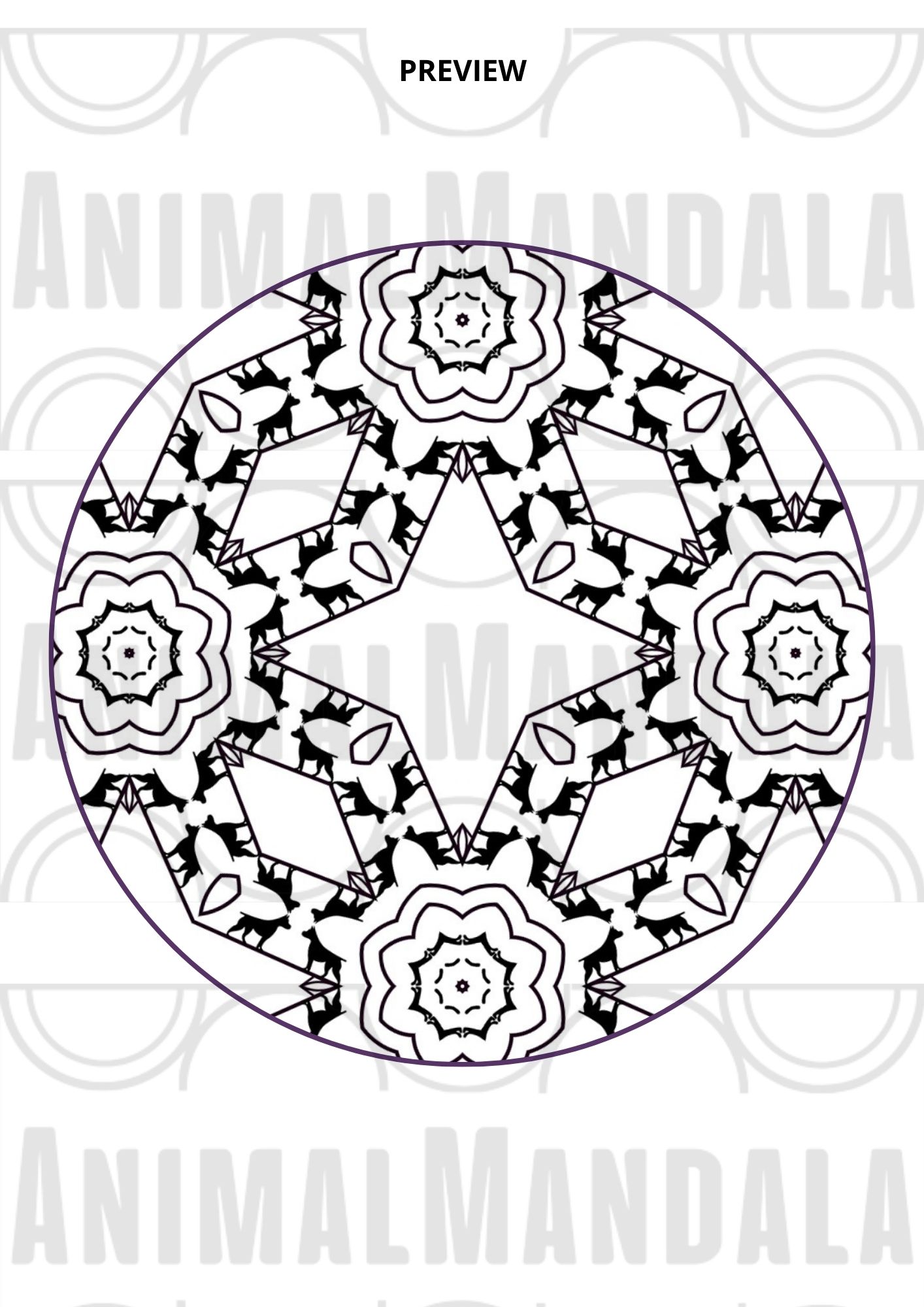
A simple place to begin is the free 4-week AnimalMandala experience, where the same design changes through seasonal color palettes.
From AnimalMandala to AniMandaLand
AnimalMandala began with the designs themselves: animals shaped, repeated, rotated, and balanced until each one became part of a circular mandala.
Over time, I wanted to explore another question:
What happens when the same mandala can open into many different color worlds?
That idea eventually grew into AniMandaLand.
AniMandaLand adds guided palettes, color exploration, helpers, recipes, and an expanding library around the original AnimalMandala designs.
The mandala remains the foundation. The digital experience gives us more ways to explore it.
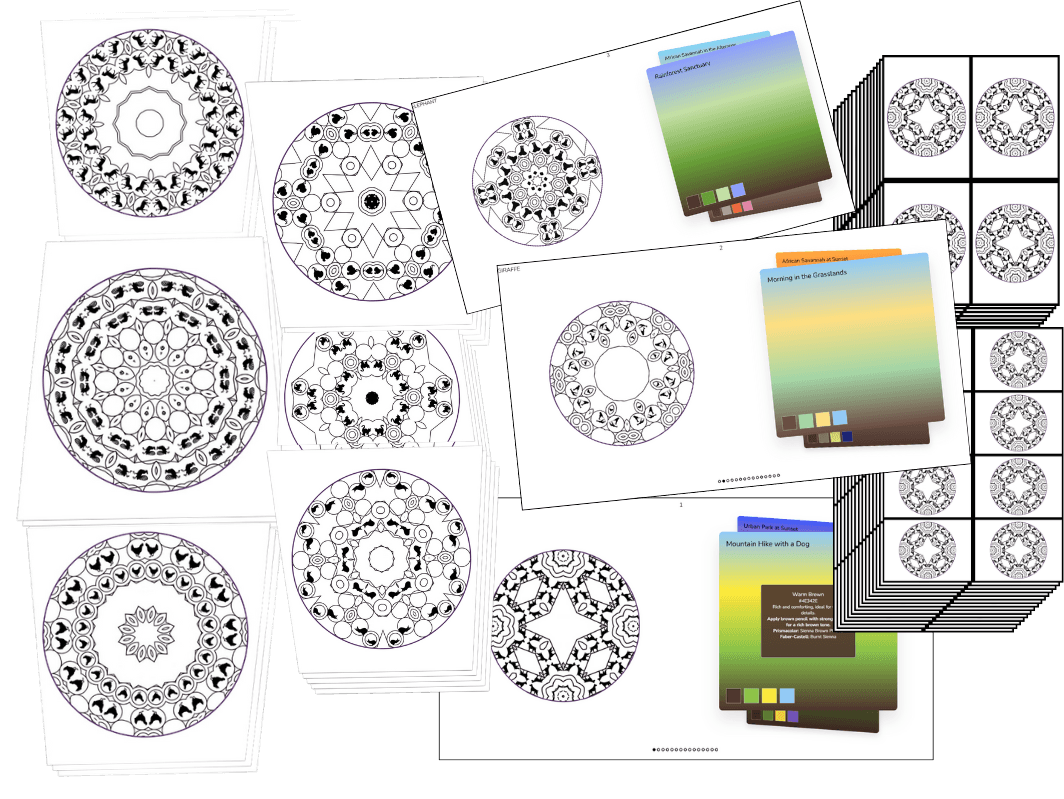
Explore the AniMandaLand experience to see how animals, symmetry, and guided color can work together.
How to start with animal mandalas
- Choose an animal that catches your attention
- Look for the center and repeating structure
- Notice how the animal form moves around the circle
- Repeat colors across mirrored or repeated sections
- Let the animal and its natural environment inspire your palette
Animal mandalas bring animals, repetition, symmetry, and color into the same circular composition.
And when the animal becomes part of the structure itself, the result is more than an animal inside a mandala.
The animal becomes the mandala.